

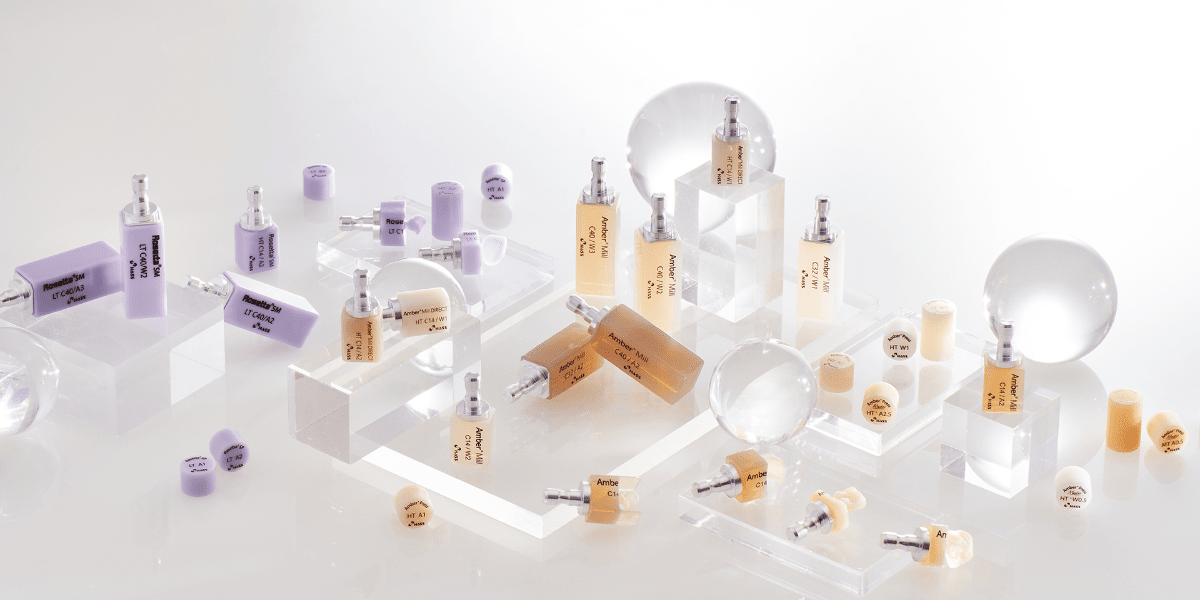



Amber Lisi-POM
Why choose Amber Lisi-POM
Key features 01
Pressing Esthetics onto Metal Frameworks
Key features 02
No Build-up! Digital Efficiency.
Key features 01
Pressing Esthetics onto Metal Frameworks
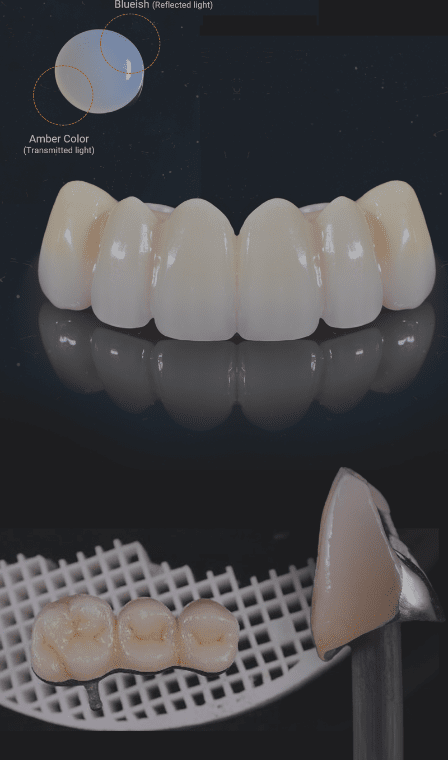
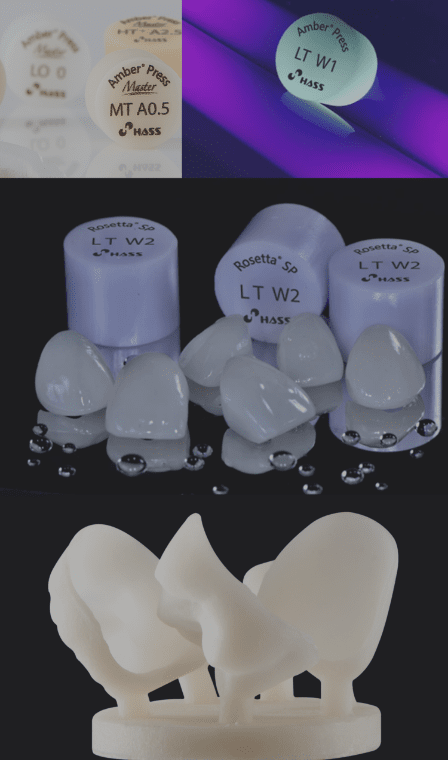
Amber Lisi-POM (LPM), Lithium-Silicate based glass ceramic ingot, is designed to be heat-pressed on metal frameworks.
With press-over technique on metal for dentistry, the stability and esthetics can be fulfilled.
You are welcomed to a new world of esthetic prosthesis.

Key features 02
No Build-up! Digital Efficiency.
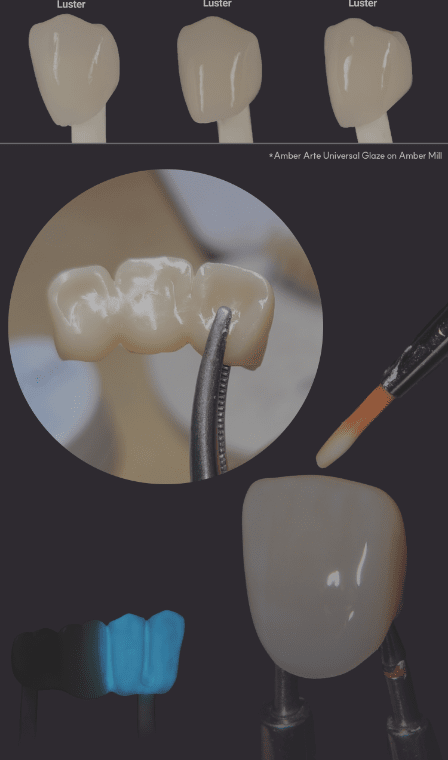
Amber Lisi-POM does not require a conventional porcelain build-up process.
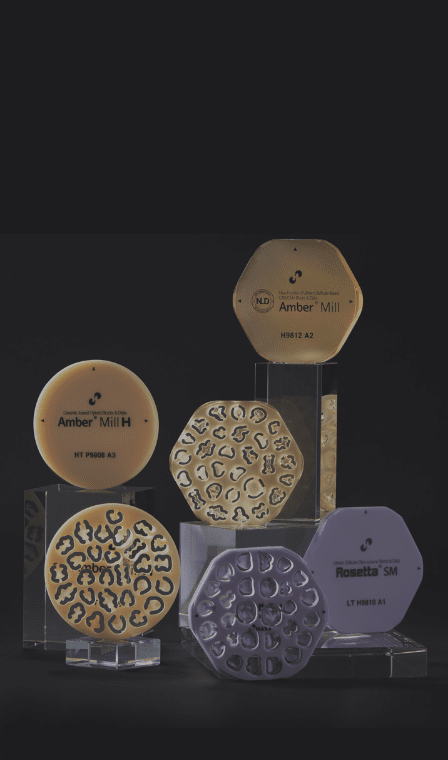
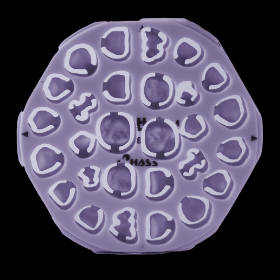
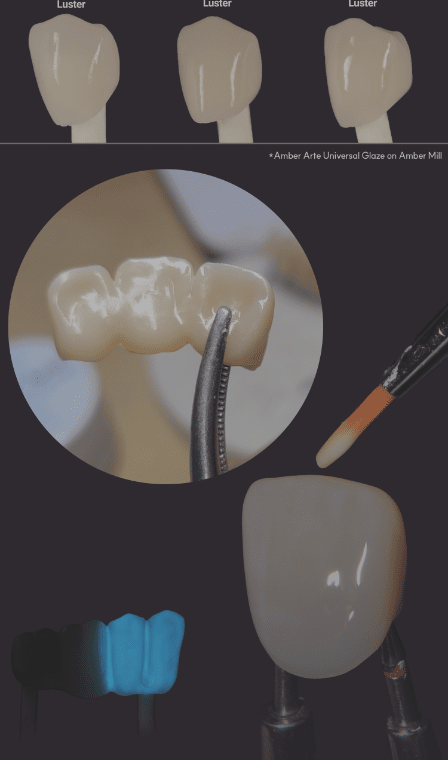
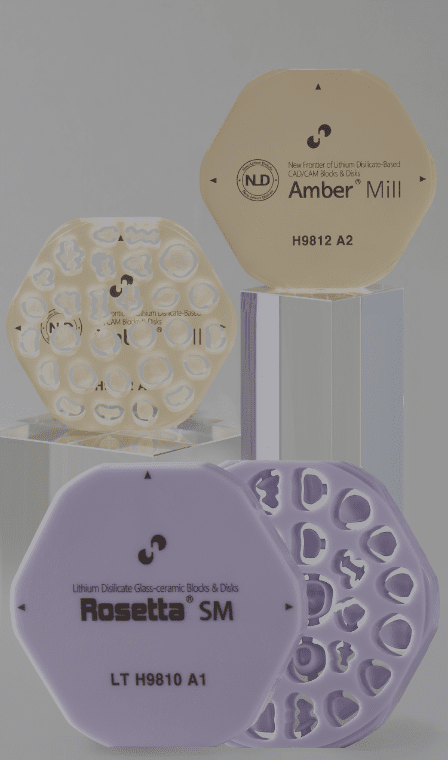
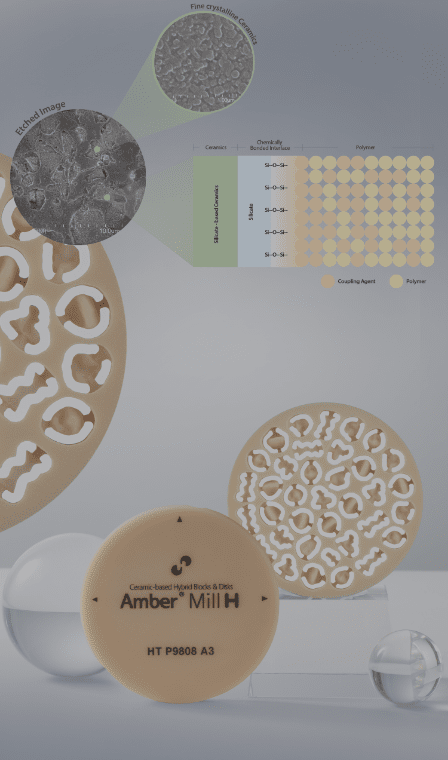
Instead, it allows dental professionals to mill multiple prosthetic units at once from a disk-shaped wax pattern.
This enables a fully digital workflow, streamlining the production of restorations while saving both time and labor.

See the Results. Trust the Material.



[1] https://doi.org/10.14347/kadt.2017.39.2.101, Kyungeun Lee, Woong-Chul Kim*, Shear bond strength in bilayer metal-heat pressed glass ceramic structure. Journal of Technologic Dentistry, 2017.06.19.
[2] Eun-Jeong Bae, Joong Yeon Lim*, Evaluation of internal fit of press ceramic and porous structured cobalt-chromium crown fabricated by additive manufacturing. Dental Research Journal, 2022.08.16.
[3] https://doi.org/10.1111/jopr.13889, Han-Sol Song, Kyung-Ho Ko*, Evaluation of shear bond strength based on substructure materials and ceramic veneering techniques. Journal of Prosthodontics, 2024.05.31.
[4] https://doi.org/10.14815/kjdm.2025.52.2.97, Jin-Su Park, Tae-Sung Bae*, Effect of fins in the metal substructure on the fracture strength of metal-ceramic crowns fabricated by porcelain sintering and heat-pressing techniques. Korean Journal of Dental Materials, 2025.06.24.


![Reference Articles] Amber Lisi-POM](https://hassbio-head.s3.ap-northeast-2.amazonaws.com/downloads/images/Vj9yuI46O1exfssr8DEkwxqcUxldh6SdxmF5bBjx.png)
![Scientific Data] Amber Press](https://hassbio-head.s3.ap-northeast-2.amazonaws.com/downloads/images/dpxX6VehpNB55GJIRG8NowL3k4bnoEY6w4ZqGLCj.png)
![Reference Articles] Amber Press](https://hassbio-head.s3.ap-northeast-2.amazonaws.com/downloads/images/WyJ1kW9oZPsKOSokWkyG8sBrjIZFtgbdmd8QL7zK.png)
![Reference Articles] Amber Lisi-POZ](https://hassbio-head.s3.ap-northeast-2.amazonaws.com/downloads/images/590QGNbLmAFCv2eW71N7iLSgTceoIqfXgYFAu55i.png)
FAQ
FAQ
Want to learn more about Amber Lisi-POM?
Check out the frequently asked questions below.
What is the difference between Amber Lisi-POM , Amber Lisi-POZ and Amber Press?
Amber Lisi-POM: CTE 12.4–14.0. A pressing ingot for fabricating esthetic PFM restorations by pressing onto a metal framework.
Amber Lisi-POZ: An ingot for pressing onto a zirconia framework.
Amber Press: A monolithic pressing ingot that cannot be used on metal or zirconia frameworks; the restoration is completed after pressing with the layering or stain technique.
I would like a basic guide for selecting the translucency of HASS products.
High Translucency: used to reproduce the translucency of the enamel layer of natural teeth.
Low Translucency: used to reproduce the translucency of the dentin layer of natural teeth.
Medium Opacity: used to mask the abutment color when it differs from the target shade.
Preferred translucency varies from user to user.
In general, when working with the stain technique only (no layering), High Translucency is commonly used for inlays and onlays, and Low Translucency for thin veneers.
Translucency selection guide for HASS products?
Preferred translucency and technique vary from user to user.
In general, High Translucency (HT) or Medium Translucency (MT) is selected when fabricating restorations with the stain technique, and Low Translucency (LT) is commonly used with the layering technique.
Many users also prefer to fabricate thin veneers of 0.5 mm or less using Low Translucency (LT) with the stain technique.
When the abutment color differs greatly from the target shade, many users fabricate the framework in Medium Opacity (MO) and complete it with the layering technique.