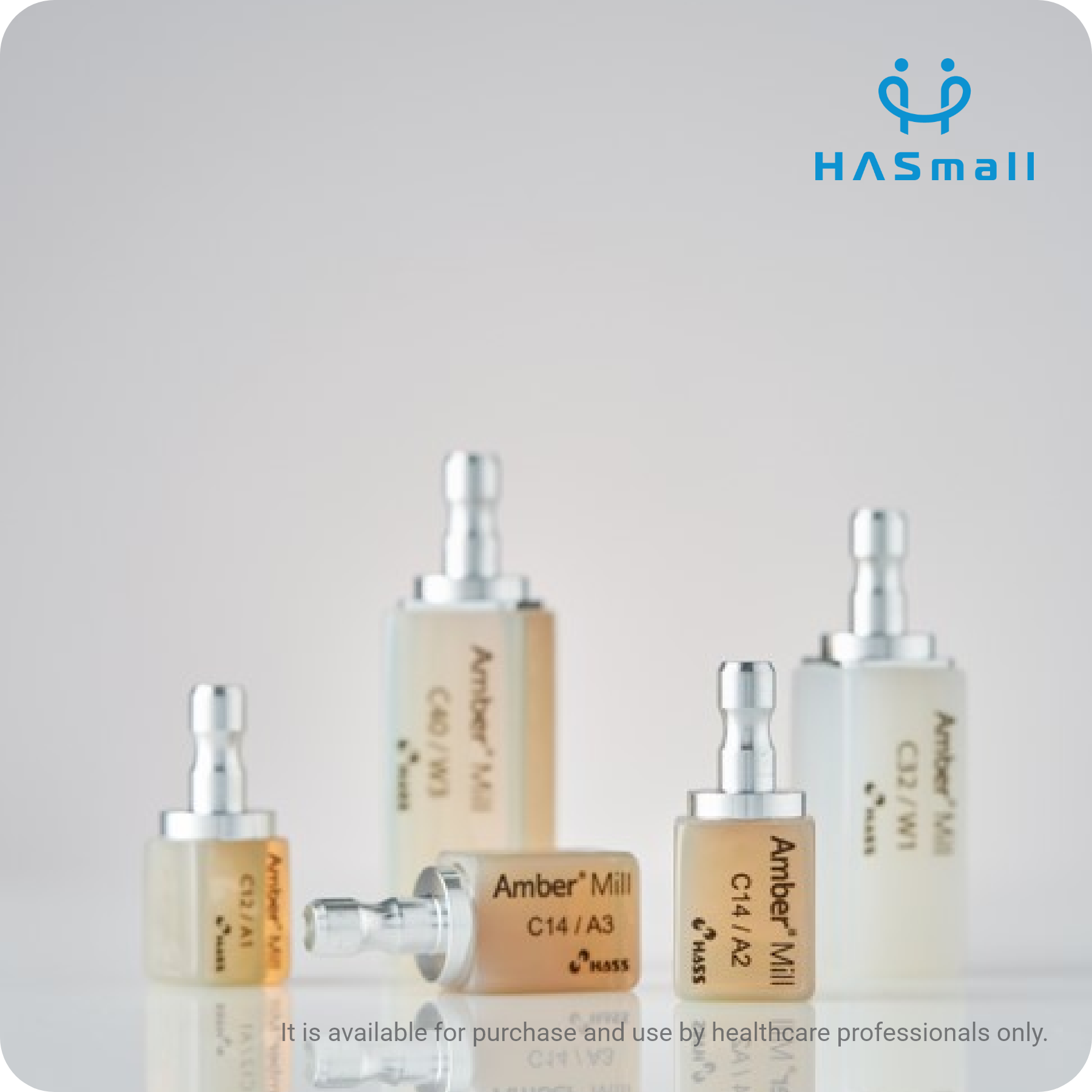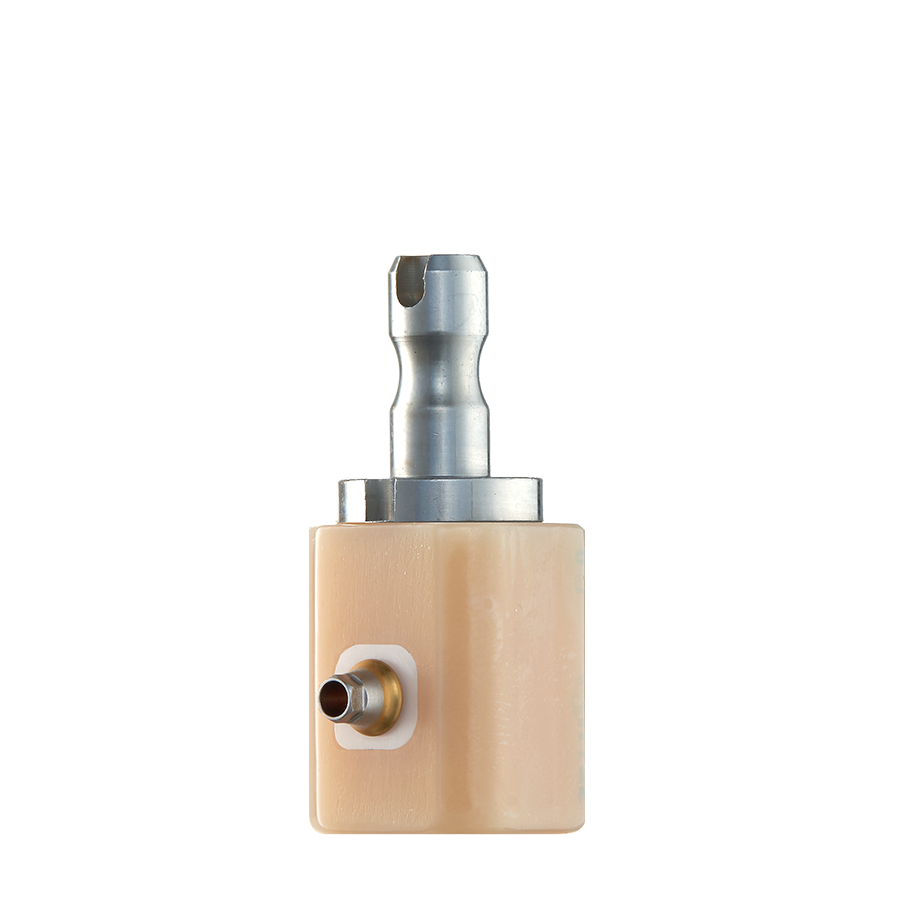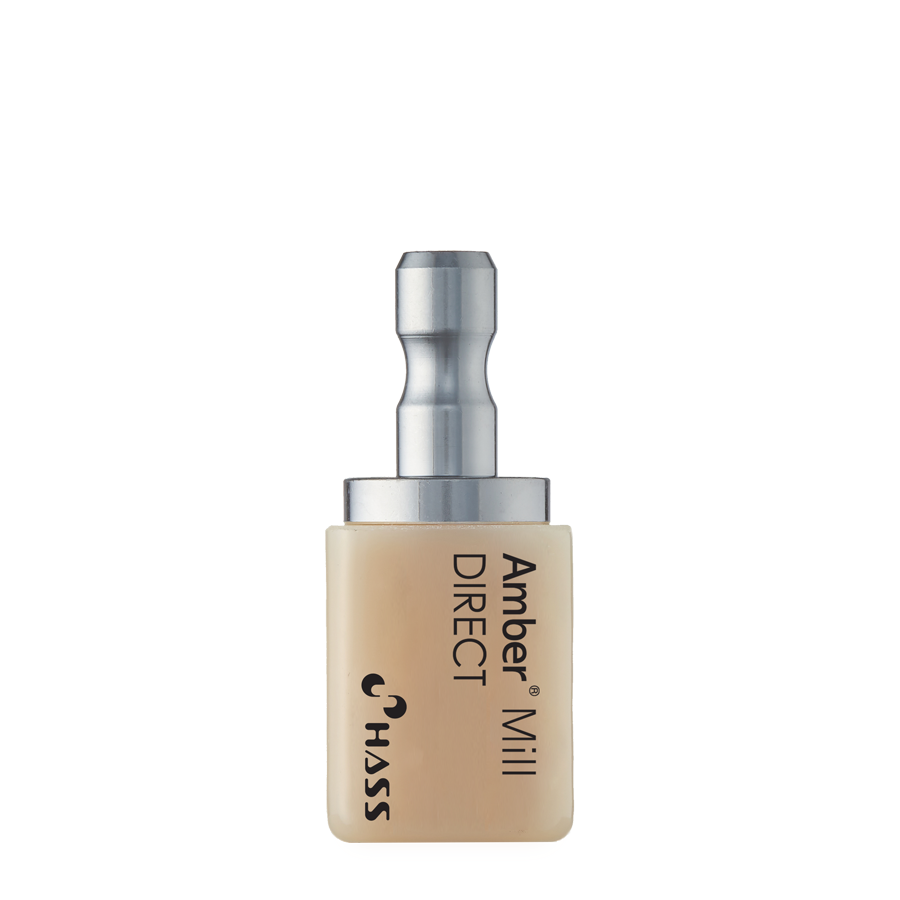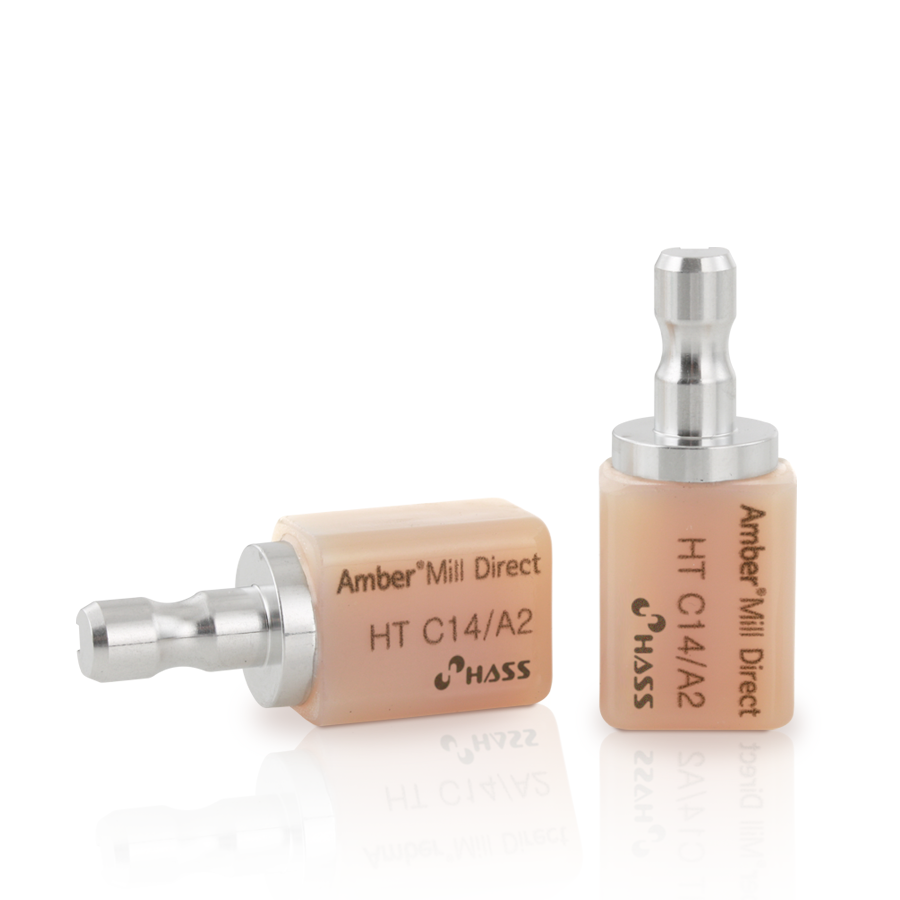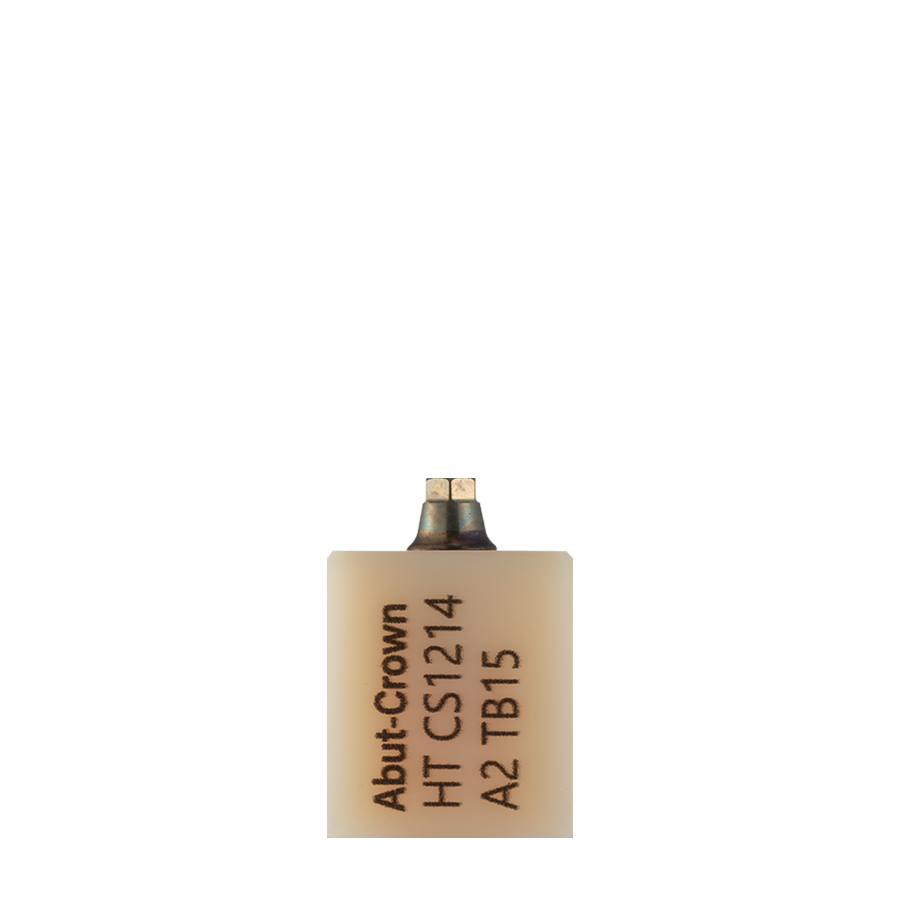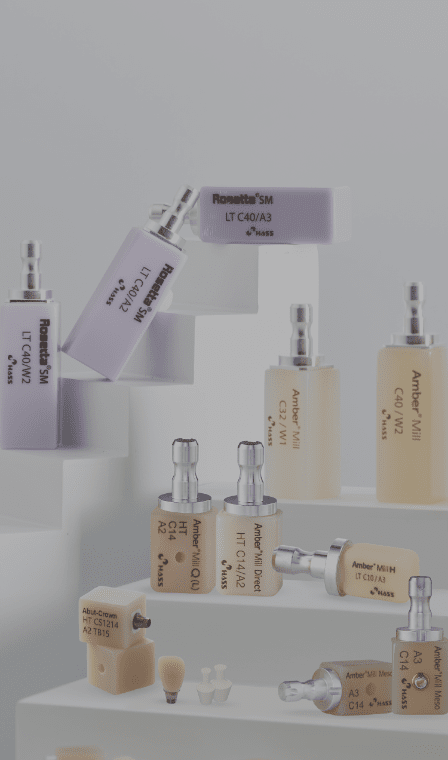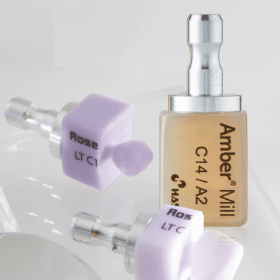





Amber Mill H
Why choose Amber Mill H
Key features 01
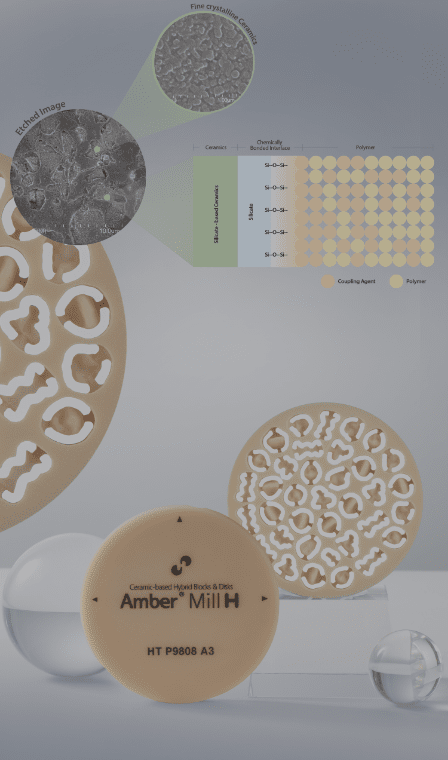
Ceramic and Polymer Ingenious combinatorics
Key features 02
Both options are available - cementation
Key features 03
Easy transmittance for light polymerization
Key features 01
Ceramic and Polymer Ingenious combinatorics
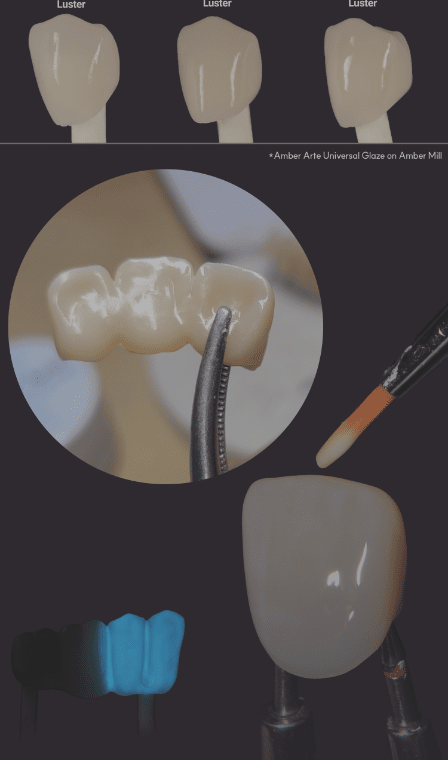
Through an innovative cross-linking technology between microcrystalline ceramics and polymers,
Amber® Mill H offers unique properties that set it apart from conventional hybrid materials such as
composite resin nano ceramics and polymer-infiltrated ceramic networks.

Key features 02
Both options are available - cementation
Amber Mill H, with its advanced ceramic-based composition, offers the unique advantage of supporting both etching and sandblasting,
providing clinicians with greater flexibility in surface treatment and ensuring optimal bonding strength during cementation.

Key features 03
Easy transmittance for light polymerization
With higher light transmittance compared to other products,
it achieves stronger initial bonding during the light-curing process.
Shorten LED curing time
Reduce chair time


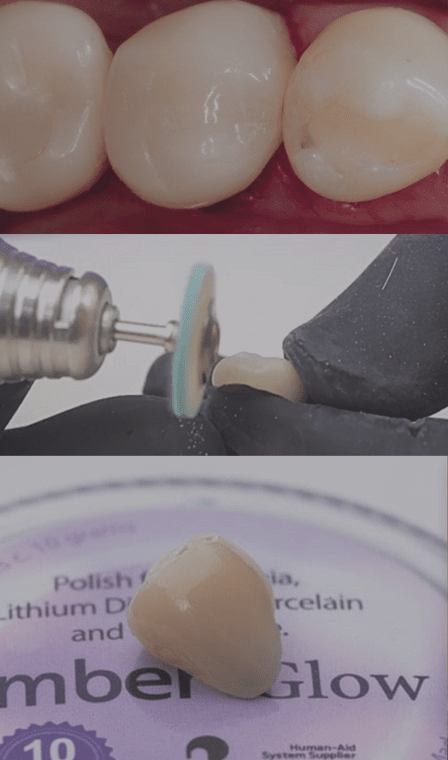
“Amber Mill H offers a wide range of indications, including crowns and inlays, and its biggest advantage is that it requires no additional crystallization firing.
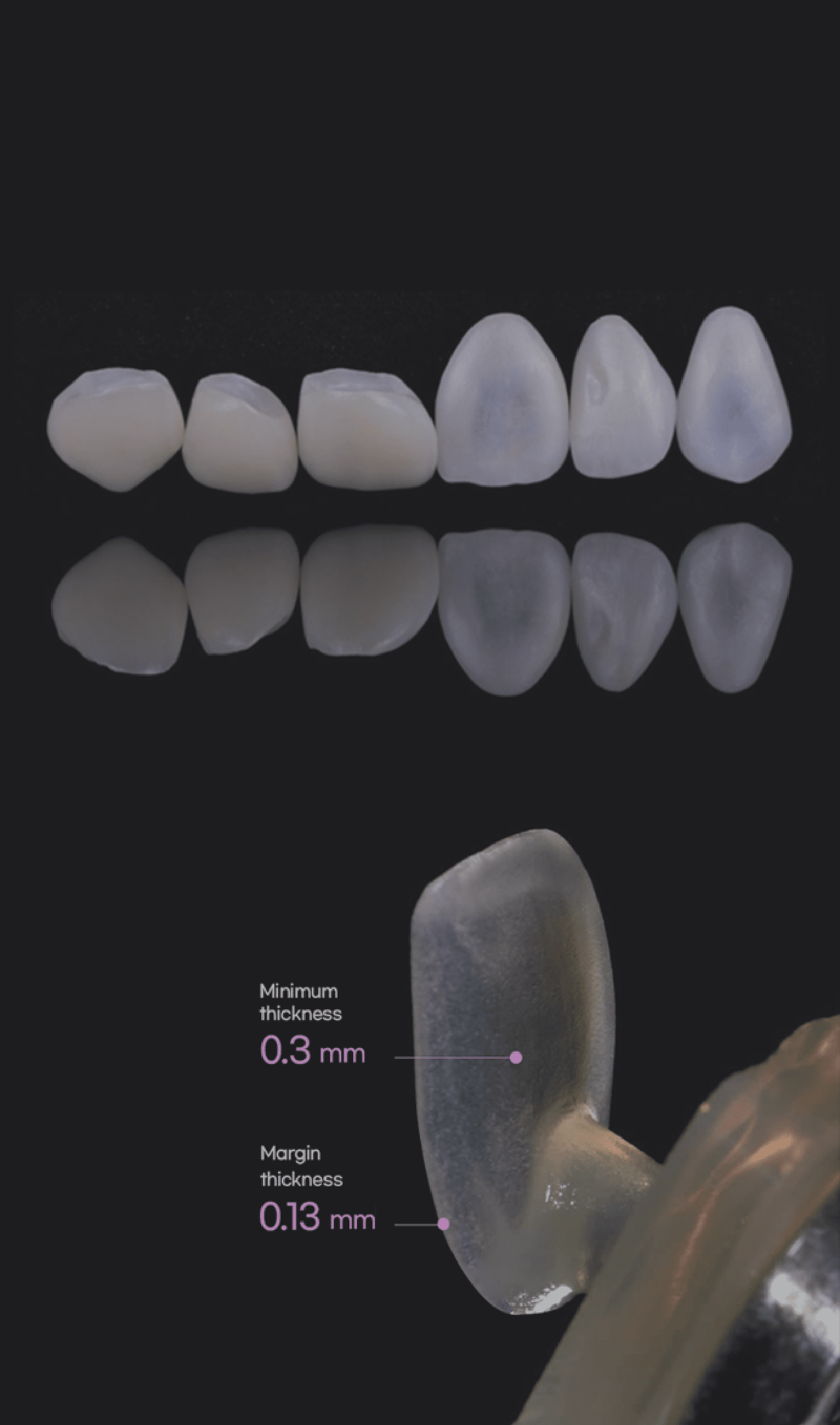
Its excellent milling properties also help minimize chipping during fabrication.
While most hybrid blocks typically require sandblasting before cementation,
Amber Mill H maintains strong adhesion even when the surface is treated with (hydrofluoric) acid instead of sandblasting.”
— Dr. Youngtae Kim, Chia Sarang Dental Clinic, South Korea

[1] https://doi.org/10.3390/ma12142252, Ruizhi Yin, Tae-Sung Bae*, Comparative Evaluation of Mechanical Properties and Wear Ability of Five CAD/CAM Dental Blocks. Materials, 2019.07.12.
[2] https://doi.org/10.1111/jerd.13391, Min-Gyu Song, Lee-Ra Cho*, Edge Chipping Resistance and Flexural Strength of CAD-CAM Ceramics Before and After Thermomechanical Aging. Journal of Esthetic and Restorative Dentistry, 2024.12.22.


![Reference Articles] Amber Mill H](https://hassbio-head.s3.ap-northeast-2.amazonaws.com/downloads/images/04G8rgQkmPsyb6GjpxBOdyHTwC6xCZHhRfMKlRMO.png)

![Scientific Data] Amber Mill](https://hassbio-head.s3.ap-northeast-2.amazonaws.com/downloads/images/8pGUe3Yw5Q4EXH61VudNjmco3W5pVklRjX9lQ3xM.png)
![Reference Articles] Amber Mill](https://hassbio-head.s3.ap-northeast-2.amazonaws.com/downloads/images/S3nSScxwq2Y32XThe4rvw6ZQpC5sB6JQdoLtN3lg.png)
![Reference Articles] Amber Mill Direct](https://hassbio-head.s3.ap-northeast-2.amazonaws.com/downloads/images/HFhPUzF9qK401ILc19qGtIAzde4qHfC4iRy3Na0S.png)
![Reference Articles] Rosetta SM](https://hassbio-head.s3.ap-northeast-2.amazonaws.com/downloads/images/iejVHgmydFhxbQB3VNH7yV9i7UGsFBxZe6WAAmf1.png)
![Reference Articles] Amber Mill Q](https://hassbio-head.s3.ap-northeast-2.amazonaws.com/downloads/images/i0aHglGdkEN70srury5b1mGKERylIFFzZKs6krp2.png)


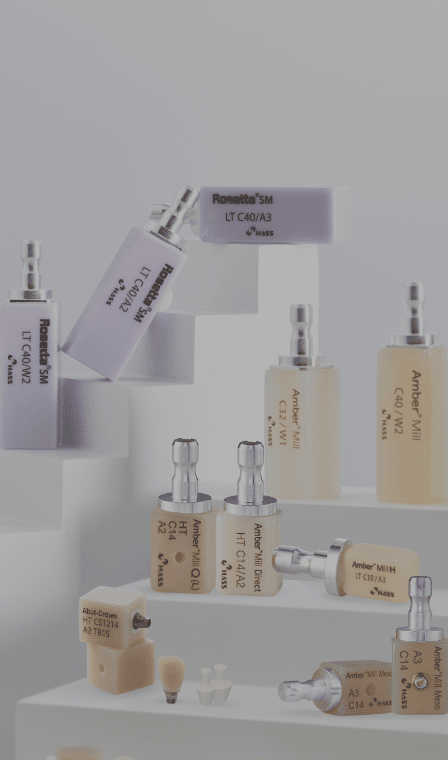
Product Line-up
Product Line-up

Indications
Indications

FAQ
FAQ
Want to learn more about Amber Mill H?
Check out the frequently asked questions below.
I would like a basic guide for selecting the translucency of HASS products.
High Translucency: used to reproduce the translucency of the enamel layer of natural teeth.
Low Translucency: used to reproduce the translucency of the dentin layer of natural teeth.
Medium Opacity: used to mask the abutment color when it differs from the target shade.
Preferred translucency varies from user to user.
In general, when working with the stain technique only (no layering), High Translucency is commonly used for inlays and onlays, and Low Translucency for thin veneers.
Translucency selection guide for HASS products?
Preferred translucency and technique vary from user to user.
In general, High Translucency (HT) or Medium Translucency (MT) is selected when fabricating restorations with the stain technique, and Low Translucency (LT) is commonly used with the layering technique.
Many users also prefer to fabricate thin veneers of 0.5 mm or less using Low Translucency (LT) with the stain technique.
When the abutment color differs greatly from the target shade, many users fabricate the framework in Medium Opacity (MO) and complete it with the layering technique.