




FAQ
Frequently asked questions about HASS dental materials.
Product Specifications & Comparison18 questions
QWhat is the difference between Amber Press, Amber Lisi-POZ and Amber Lisi-POM?
A
Amber Lisi-POM: CTE 12.4–14.0. A pressing ingot for fabricating esthetic PFM restorations by pressing onto a metal framework.
Amber Lisi-POZ: An ingot for pressing onto a zirconia framework.
Amber Press: A monolithic pressing ingot that cannot be used on metal or zirconia frameworks; the restoration is completed after pressing with the layering or stain technique.
QI would like a basic guide for selecting the translucency of HASS products.
A
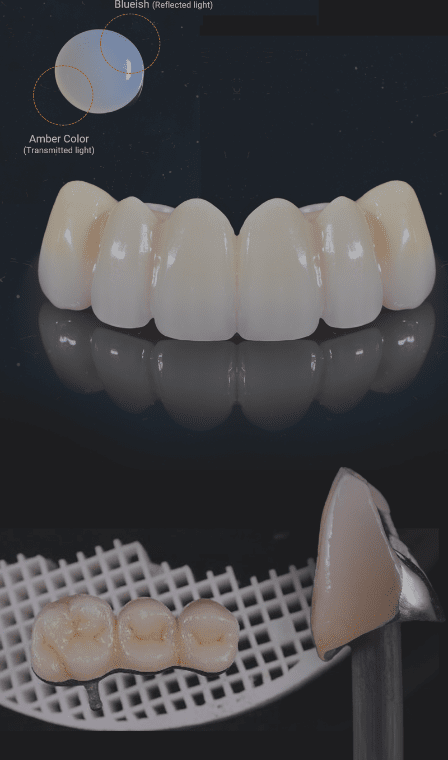
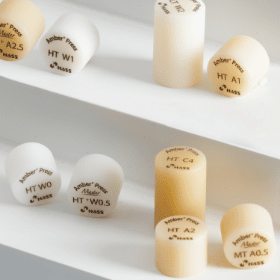
High Translucency: used to reproduce the translucency of the enamel layer of natural teeth.
Low Translucency: used to reproduce the translucency of the dentin layer of natural teeth.
Medium Opacity: used to mask the abutment color when it differs from the target shade.
--> Preferred translucency varies from user to user.
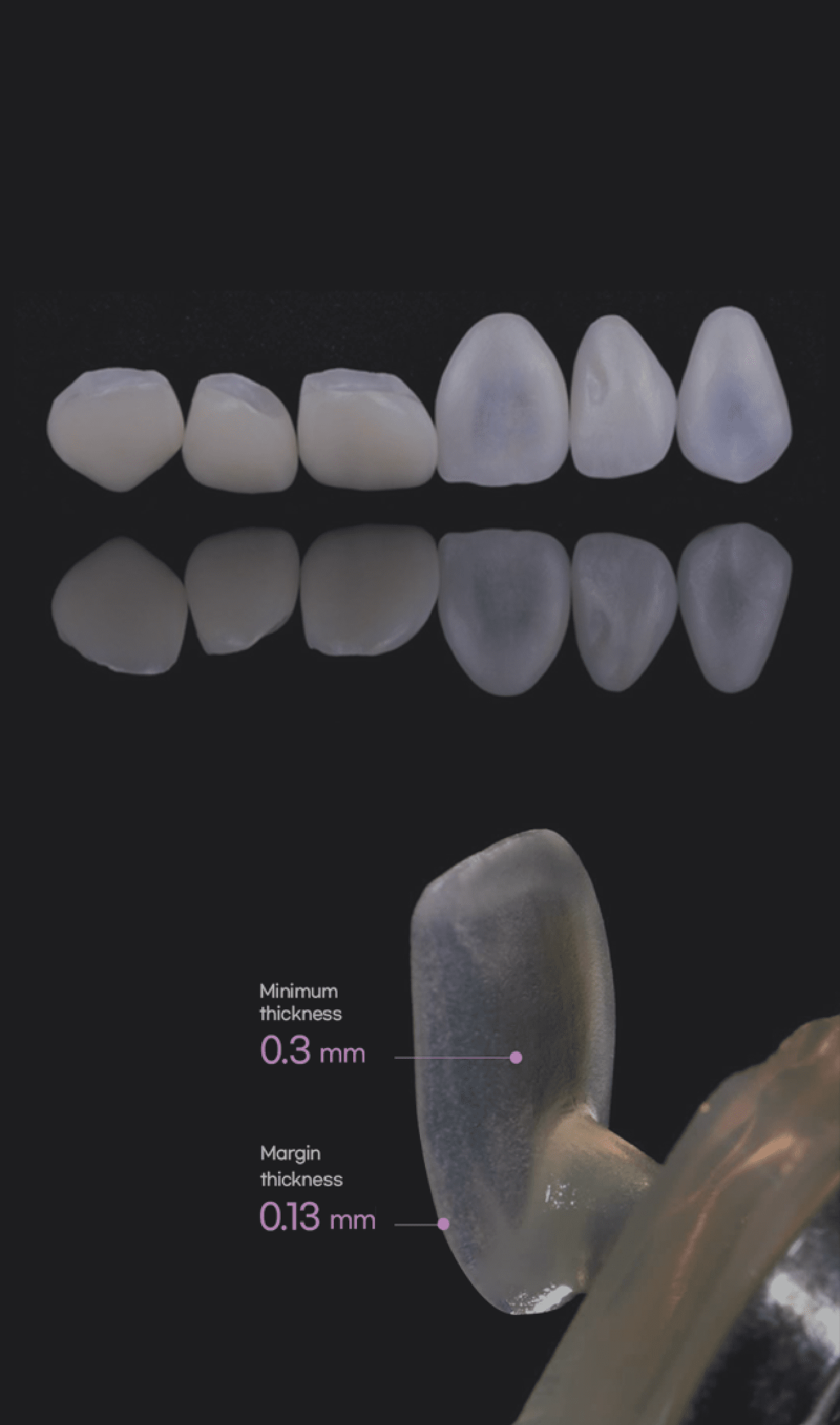
In general, when working with the stain technique only (no layering), High Translucency is commonly used for inlays and onlays, and Low Translucency for thin veneers.
QCan the final Amber Mill restoration be re-fired to make it more translucent?
A
Re-firing cannot increase translucency; it can only reduce it. Translucency can be reduced by re-firing up to 8 times.
QWhat is the maximum firing temperature for stain & glaze and add-on powder with Amber Mill Direct?
A
To fire without changing the translucency, the maximum firing temperature should be within the range of 740–780 °C.
QWhat is the biggest difference between Amber Mill and Amber Mill Direct?
A
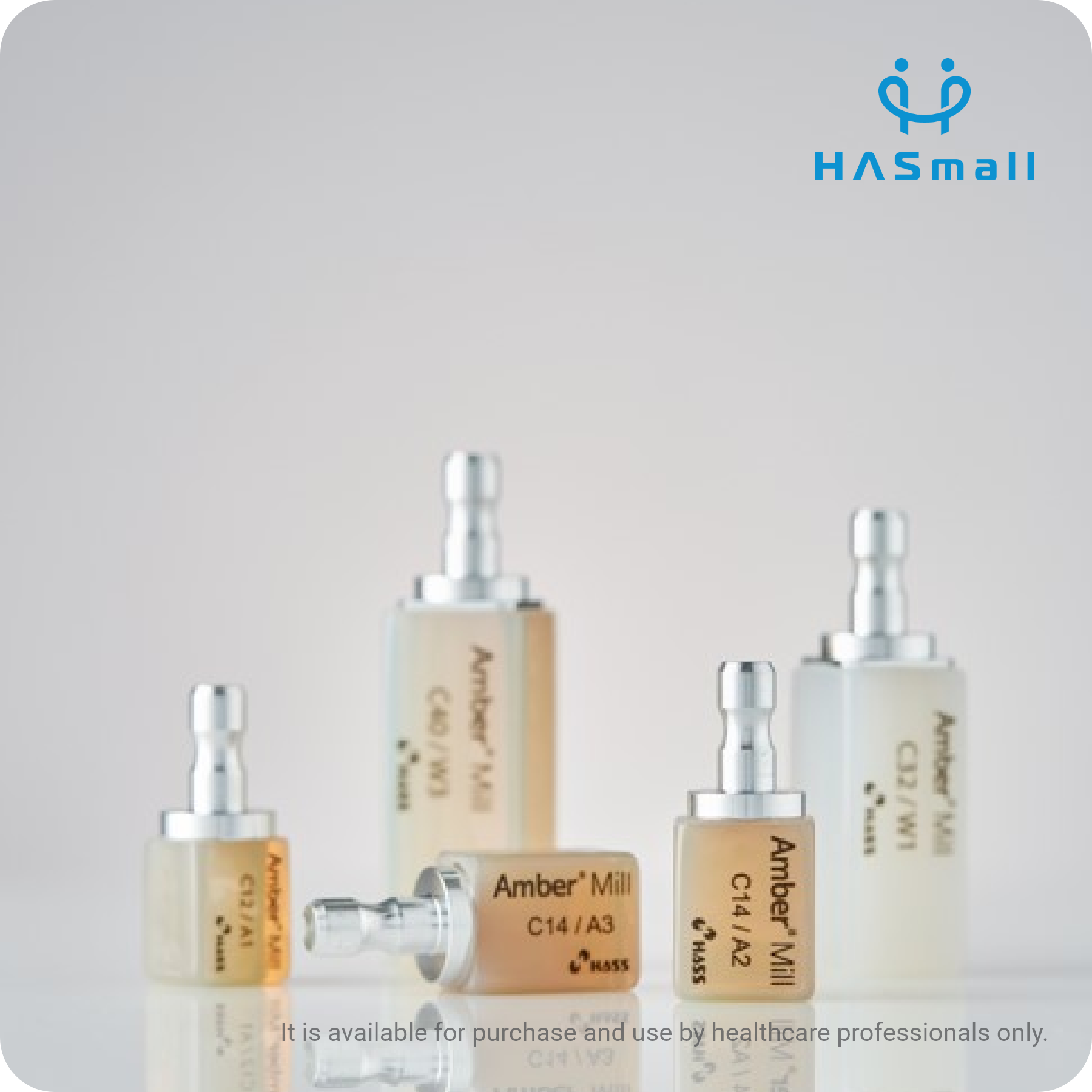
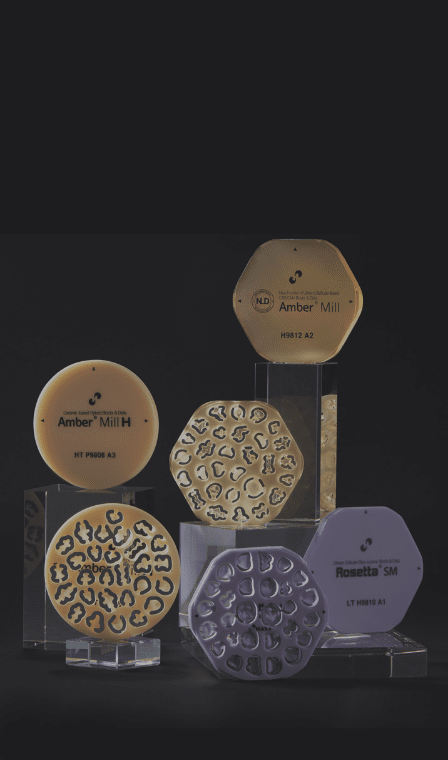
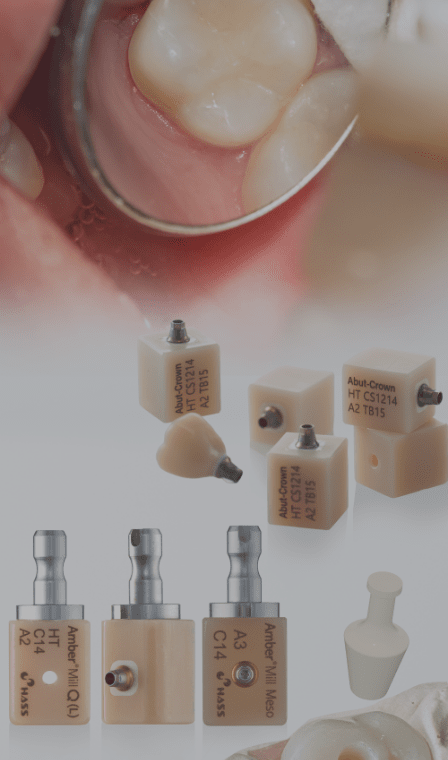
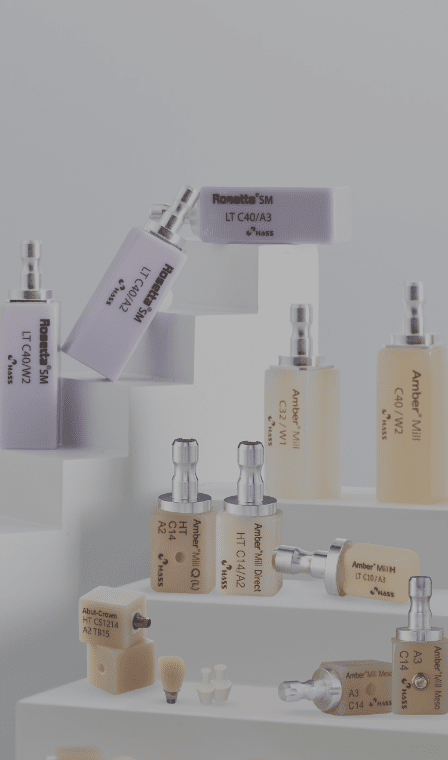
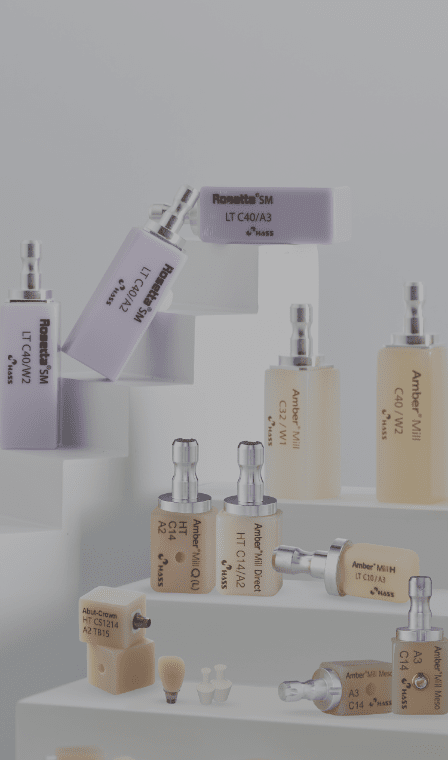
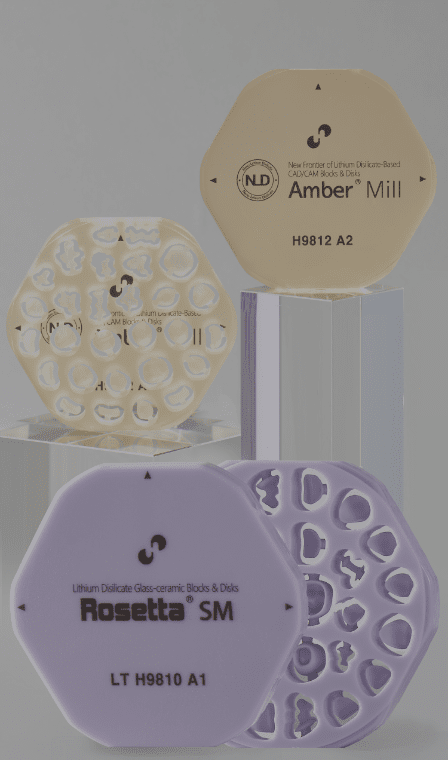
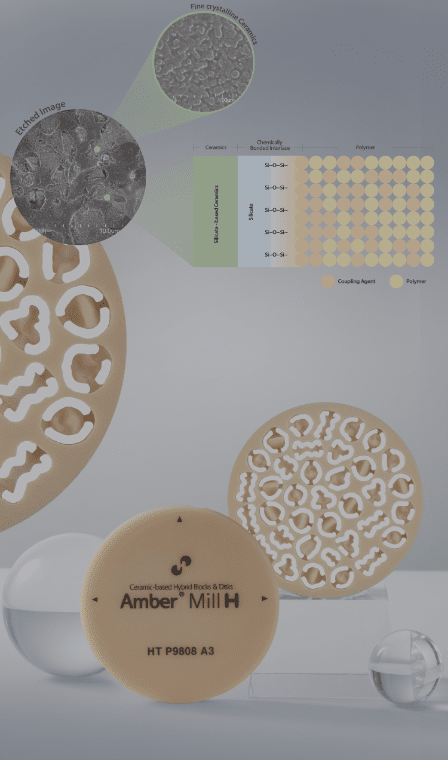
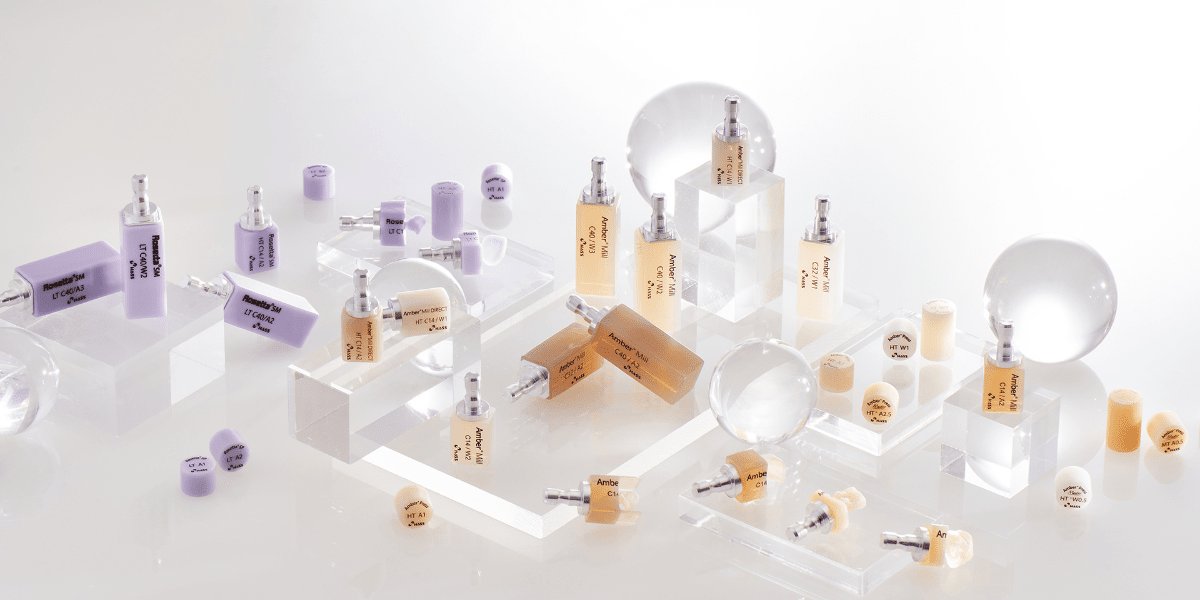
Amber Mill Direct: A fully crystallized block that requires no separate crystallization firing after milling; a gradient block that resembles the structure of natural teeth.
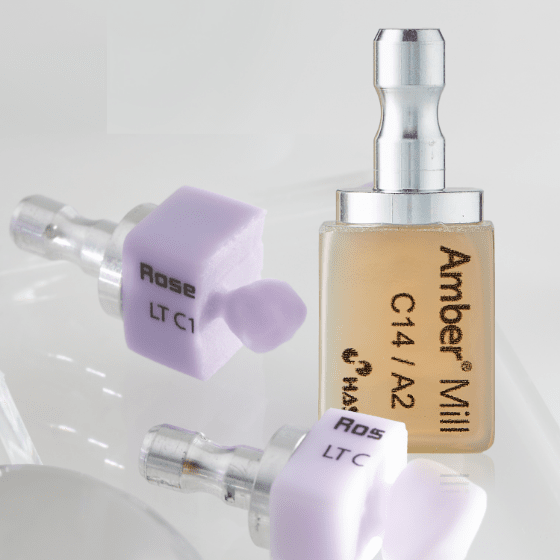
Amber Mill: A block in a nano-crystalline state, giving excellent edge-milling stability; its translucency can be freely changed by the crystallization firing temperature.
QDoes Rosetta SP have bleach shades?
A
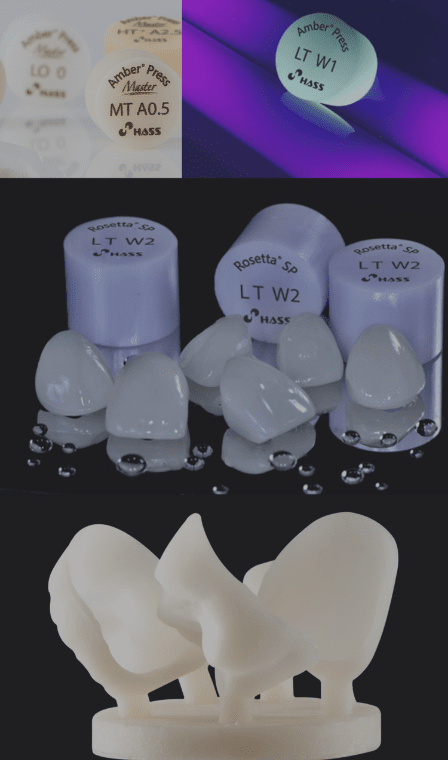
W1–W4
QCan the translucency of Amber Press be adjusted like Amber Mill?
A
Only Amber Mill allows the translucency to be adjusted by the maximum crystallization firing temperature.
QDoes Amber Press have an MT translucency?
A
It is not currently sold.
QDoes Amber Press have bleach shades?
A
Five bleach shades, W0–W4, are available.
QDoes Rosetta SM have an MT translucency?
A
Two shades are available: W1 and A1.
QDoes Rosetta SM have an opaque translucency?
A
Yes, Medium Opacity (MO 0–4, 5 shades) is available.
QApproximately how many restorations can be milled from a Rosetta disk?
A
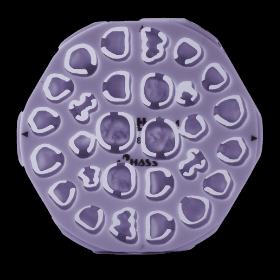
It depends on the size of the restorations. In general, about 24 restorations can be milled.
QTranslucency selection guide for HASS products?
A
Preferred translucency and technique vary from user to user. In general, High Translucency (HT) or Medium Translucency (MT) is selected when fabricating restorations with the stain technique, and Low Translucency (LT) is commonly used with the layering technique.
Many users also prefer to fabricate thin veneers of 0.5 mm or less using Low Translucency (LT) with the stain technique.
When the abutment color differs greatly from the target shade, many users fabricate the framework in Medium Opacity (MO) and complete it with the layering technique.
QCan Amber Arte also be used on zirconia restorations?
A
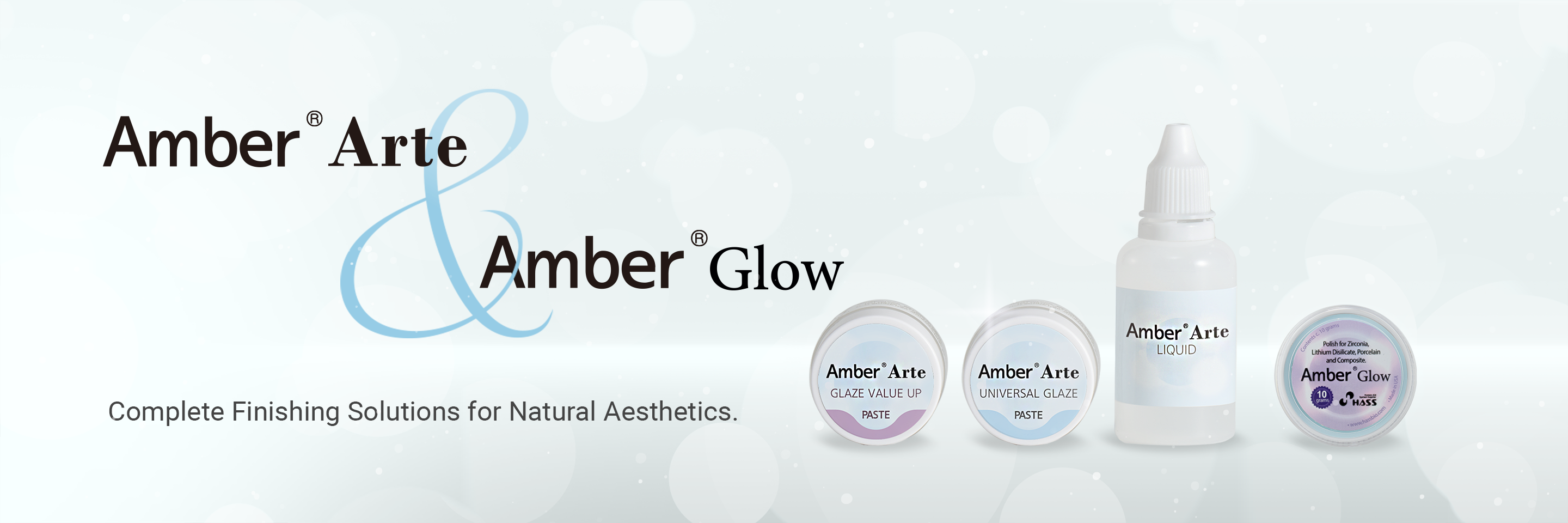
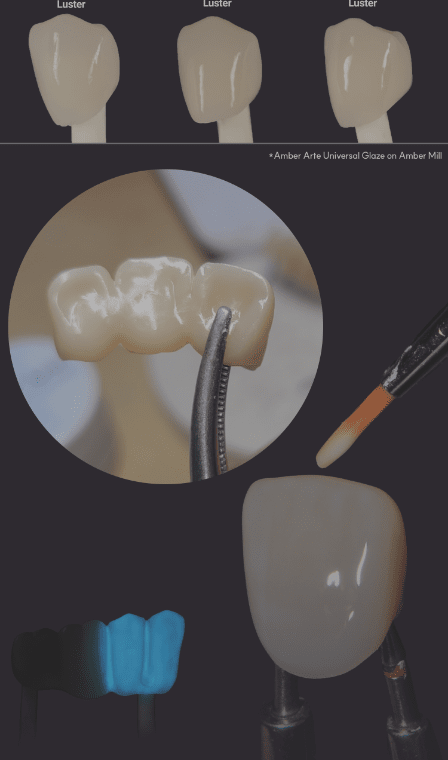
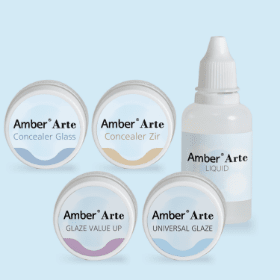
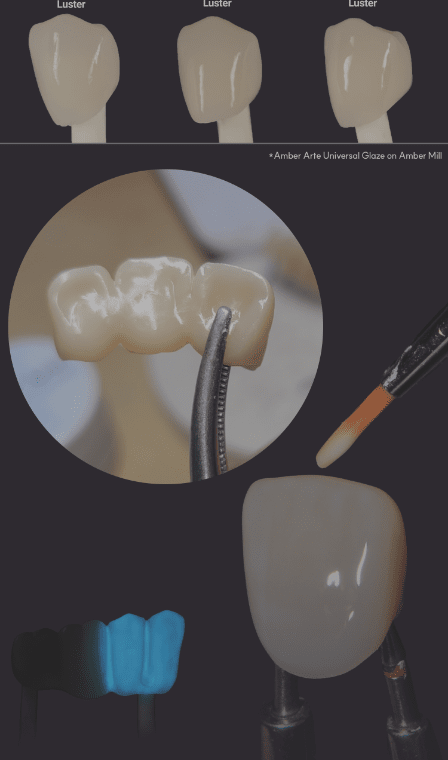
It has a CTE suitable for both zirconia and lithium disilicate restorations, and the gloss (luster) can be adjusted by the maximum firing temperature, making it a good choice for esthetic restorations.
QPlease provide a guide for selecting Amber Mill blocks.
A
Select the block shade that matches the target shade, and after milling, perform crystallization firing at the maximum temperature that corresponds to the target translucency.
QRe-firing Amber Mill can lower the translucency, but why can't it raise it?
A
During crystallization firing, the lithium crystal phase grows and its density increases, which lowers the translucency.
Once the crystals have grown and densified, they do not become smaller or less dense again.
Re-firing can only grow the crystals and increase their density to reach the target translucency.
QCan Amber Arte be used on zirconia restorations?
A
Zirconia has a CTE of 10.0–10.5, which is the same as or very similar to lithium disilicate.
Amber Arte Glaze can be used on both zirconia and lithium disilicate restorations.
It bonds well to zirconia restorations, and its high fluorescence enhances the esthetics of zirconia restorations.
QWhat are the shrinkage rates of Amber Mill and Rosetta SM?
A
Rosetta SM 0.04%,
Amber Mill 0.05%
No questions for this product under this topic. Try another topic or clear the product filter.
Machining & Milling Guide15 questions
QWhat are the recommended cement gap and margin thickness settings when designing a milled lithium disilicate block restoration?
A
A default cement gap of 0.06 mm and a horizontal margin width of 0.2 mm are recommended.
Adjust the cement gap and margin thickness in the design according to the condition of your milling machine. Because the crystal size of Amber Mill before crystallization firing is nano-scale, its edge-milling performance is excellent, so you may design with a margin thickness of 0.15 mm for the first milling test.
QWhen removing sprues from a disk, what should I be careful about compared with a block?
A
Use a water-cooled air turbine to prevent cracks caused by thermal shock.
If you use a laboratory micromotor without water cooling, wrap the intaglio surface of the restoration with wet tissue while cutting. Cutting quickly at high speed can cause cracks from thermal shock.
Proceed with cutting carefully.
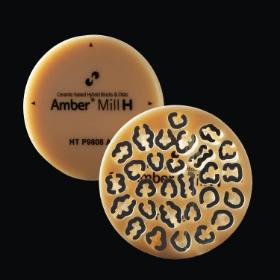
QHow many restorations can be fabricated from one Amber Disk?
A
The number of restorations that can be milled depends on the size and type of restoration.
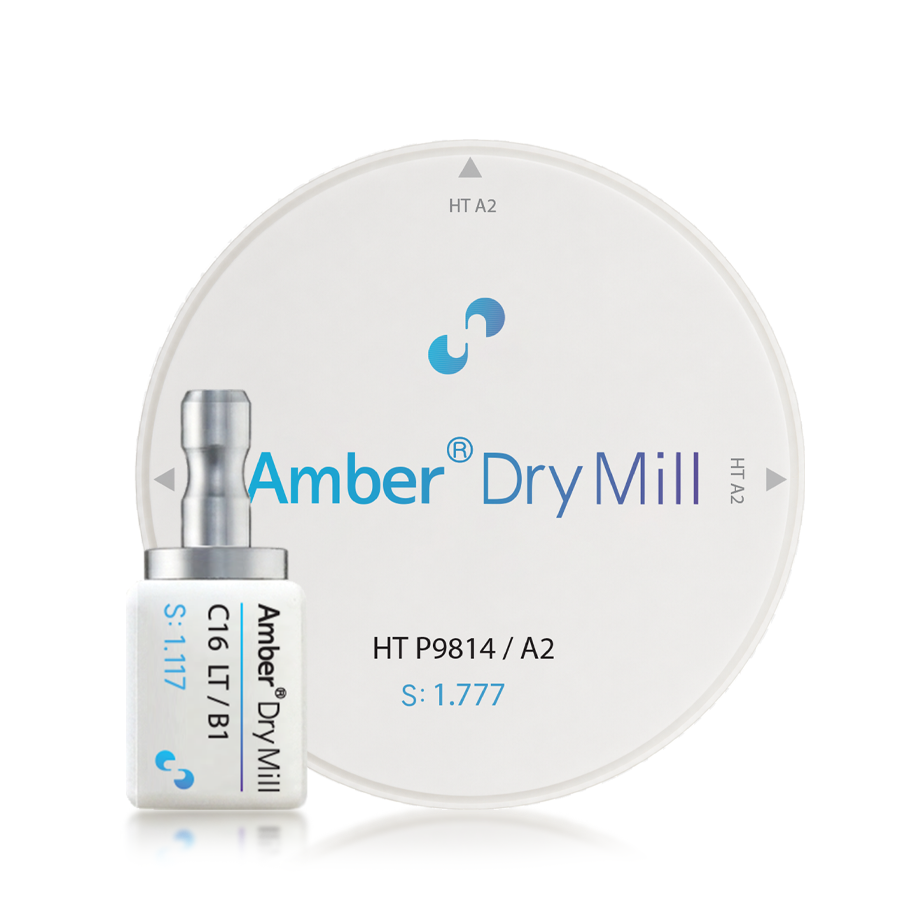
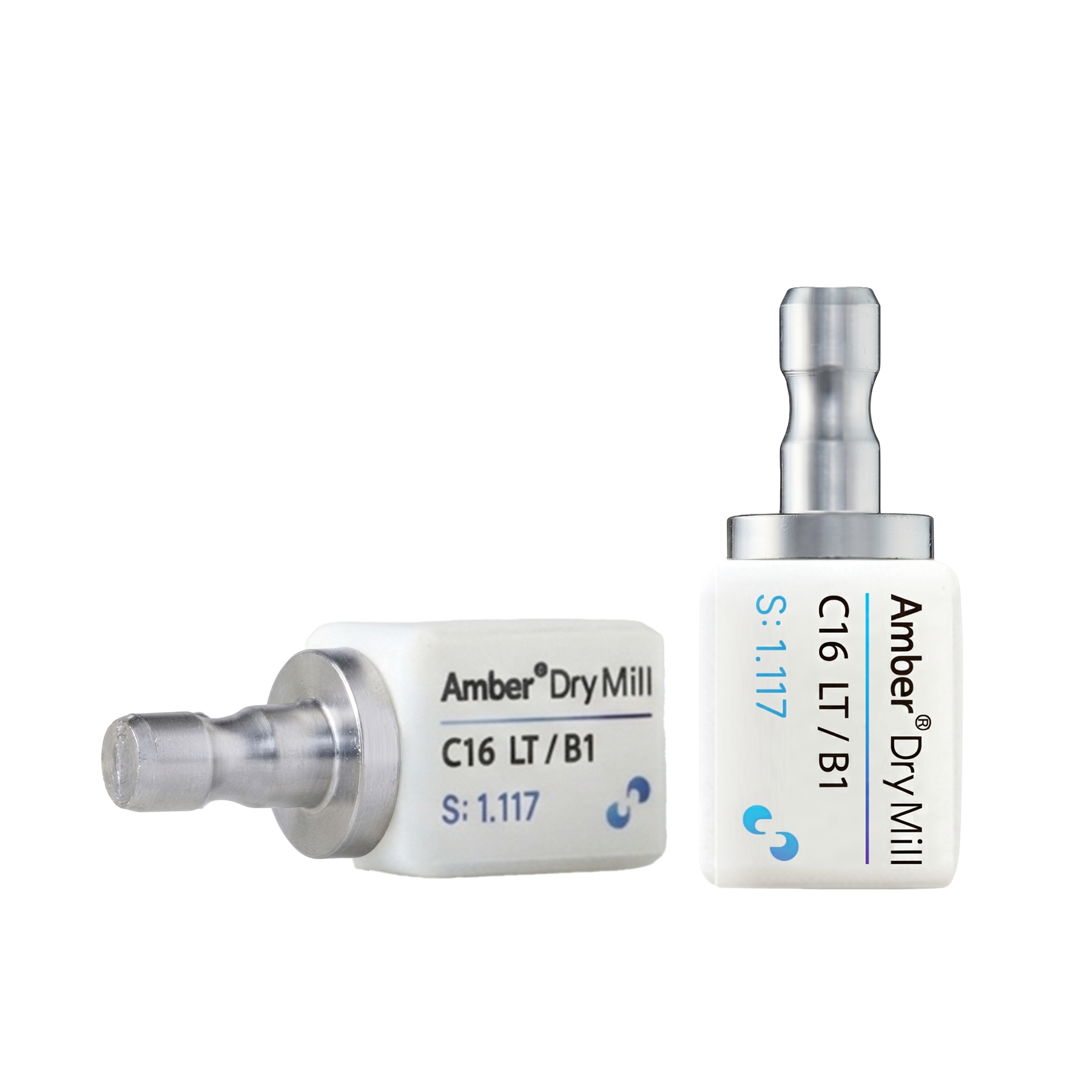
In general, 20–30 restorations can be milled.
QDoes the disk fit a standard C-clamp?
A
Yes, it does.
Mount it in the jig according to the Amber Mill Disk manual.
QWhich types of milling burs and tool geometries are recommended for machining Amber Mill?
A
Diamond-coated (electroplated) burs sold by the milling machine manufacturer are recommended.
The recommended bur geometry may differ depending on the milling template.
QWhat spindle speed and feed rate are suitable for machining Amber Mill?
A
They may differ depending on the milling template provided by the machine vendor. In general, milling is commonly done at a spindle speed of 60,000 RPM.
Some vendors provide templates with a slower feed rate to prevent chipping during milling, while others set a faster feed rate to shorten the milling time.
QWhat roughing and finishing strategies are recommended for machining Amber Mill?
A
Because tool wear is severe during roughing, splitting roughing into two stages is advantageous for tool life. If machining is largely completed in the semi-finishing stage, it is desirable to minimize finishing.
QWhat are the recommended step-over and step-down machining parameters?
A
Each machine manufacturer qualifies the material on its equipment through compatibility testing, so please follow the manufacturer's guidance for exact parameters.
QWhat coolant conditions are required for machining Amber Mill?
A
Use the coolant recommended by the milling machine manufacturer.
QWhat is the expected tool lifetime for machining Amber Mill?
A
It depends on operator skill, the condition of the milling machine and the type of restoration (crown, inlay, onlay, veneer, etc.).
In general, about 24–28 blocks per tool.
QWhich strategy should I use on the milling machine?
A
imes icore (iCAM, from License 2023), vhf (DentalCAM from ver. 8.0), DOF, Manix --> these milling machines have the HASS SM Disk milling template installed.
QPlease provide a list of milling machines that can mill Rosetta SM Disk.
A
imes icore (iCAM, from License 2023), vhf (DentalCAM from ver. 8.0), DOF, Manix
QHow often should the water in a wet milling machine tank be replaced?
A
For a 6–8 L tank, replace the water with the type recommended by the milling machine manufacturer after milling about 40 crowns.
For a tank of about 2 L, replace it after milling about 15 crowns. This also extends the life of the milling burs.
QWhat are the intaglio design settings when fabricating restorations by milling lithium disilicate blocks?
A
The default cement gap is 0.06 mm (60 µm) and the horizontal margin width is 0.2 mm.
Amber Mill blocks have excellent edge-milling stability, so the margin can be designed at 0.15 mm and milled without chipping at the margin.
QWhat is the recommended guide for removing milling supports from HASS disks?
A
To prevent cracks caused by thermal shock, use a water-cooled air turbine and diamond-coated (electroplated) burs.
No questions for this product under this topic. Try another topic or clear the product filter.
Pressing & Investing5 questions
QWhat sprue diameter is recommended when using pressing products?
A
In general, a sprue diameter of 2.5–3 mm is recommended.
QWhich burnout method is recommended when investing and burning out 3D-printed castable resin patterns?
A
Castable resin generally expands in volume during burnout, which can crack the invested ring; such cracks can break the ring during pressing or create unwanted fin-shaped flash on the pressed restoration. For this reason, rapid burnout is recommended.
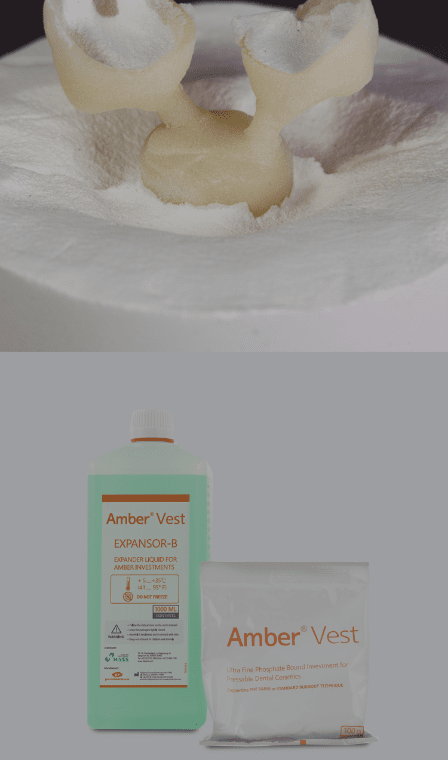
QI am using Amber Vest for the first time. What is the mixing ratio?
A
26 ml of liquid per 100 g of powder.
Start with a special liquid : distilled water ratio of 16:8, check the internal fit of the pressed result, and then adjust the ratio of special liquid to water.
We recommend keeping the total liquid volume at 26 ml whenever possible.
QDoes adjusting the powder/liquid mixing ratio of Amber Vest change its shrinkage/expansion?
A
If the amount of liquid is increased above the recommended total (26 ml), expansion decreases.
At the same total of 26 ml, if the proportion of special liquid is higher than that of distilled water (i.e., more special liquid is used), expansion increases.
QBurnout furnace temperature and holding time for Amber Vest
A
It depends on the condition of the furnace, but in general, for one or two 100 g rings, follow the guide of holding at 850 °C for 30 minutes.
No questions for this product under this topic. Try another topic or clear the product filter.
Firing & Heat Treatment6 questions
QWhen firing lithium disilicate restorations, why must ceramic firing pins be used and metal firing pins avoided?
A
Because of the CTE difference between metal firing pins and lithium disilicate, cracks can occur in the restoration. For this reason, metal firing pins are not recommended.
QWhy does the restoration look greyish or more translucent after glaze firing?
A
If the drying time in the glaze firing schedule (6 minutes recommended) is too short, the firing table of the porcelain furnace closes and the temperature rises before the glaze is completely dry, causing blackening.
Please follow the recommended firing schedule.
QWhy does the translucency of Amber Mill not change even when layering porcelain is fired at a temperature higher than the crystallization firing temperature?
A
For the crystal phase to change, temperature matters, but a sufficient holding time is also required. This is why the crystallization firing schedule holds the maximum temperature for 15 minutes.
A typical porcelain powder firing schedule holds the maximum temperature for only 1 minute.
Because the holding time at the maximum porcelain firing temperature is as short as about 1 minute, the translucency does not change.
QWhat happens if the drying time is shorter than the 6 minutes specified in the Amber Arte firing schedule?
A
If the drying time during glazing is too short, the glaze liquid is not completely dried through, and the fired result can turn greyish. This is called blackening. In general, observe the 6-minute drying time, and when glazing 10 or more restorations at once, extend the drying time by 2 minutes or more to prevent blackening.
QWhy is crystallization firing necessary?
A
Ingot products are crystallized during the pressing process, but milling blocks and disks must undergo crystallization firing after milling to obtain the desired translucency, shade and strength. During crystallization firing, the lithium crystal phase grows and its density increases, developing strength, shade and translucency.
QWhy is a cooling time included in the firing schedule?
A
In laboratory environments where air-conditioner airflow is directed at the porcelain furnace, or where the furnace is by a window exposed to cold drafts, a cooling time is recommended in the firing schedule to prevent cracks in the restoration caused by thermal shock.
No questions for this product under this topic. Try another topic or clear the product filter.
Surface Treatment & Stain/Glaze1 question
QWhat should I do if bubbles appear on the surface after firing Amber Arte Glaze?
A
Surface bubbles can occur with porcelain furnaces that have a high vacuum level. If your porcelain furnace has a high vacuum level, do not maintain vacuum in the firing schedule—fire in air and surface bubbles will not occur. If a second glaze firing is needed, firing in air will also prevent bubbles.
No questions for this product under this topic. Try another topic or clear the product filter.
Clinical Application & Troubleshooting10 questions
QWhich tools are recommended for polishing thin areas such as margins on lithium disilicate restorations?
A
Use ceramic-specific rubber wheels and points for polishing.
For thicker areas such as occlusal adjustment or surface texture, diamond stone points and wheels reduce frictional heat during polishing and make the work easier and faster.
QWhy do fins (flash) occur on pressed restorations such as veneers or crowns printed in castable resin?
A
When burning out restorations printed in castable resin, burning them out quickly prevents fins caused by the volumetric expansion of the castable resin during combustion.
A common method: 1) Place the set investment ring in a burnout furnace that has already reached the maximum temperature of the burnout schedule and hold for 5 minutes so the temperature rises all the way inside the ring. 2) Open the burnout furnace door slightly for about 5 minutes to let air into the furnace. 3) Close the door, hold for about 30 minutes, then proceed with pressing. This prevents fins.
QHow should lithium disilicate products be bonded? Which products does HASS recommend?
A
Use the standard resin cements and bonding systems used for bonding lithium disilicate restorations.
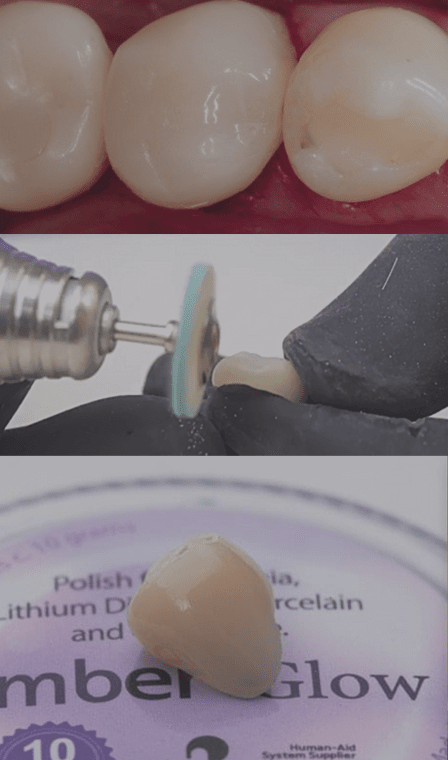
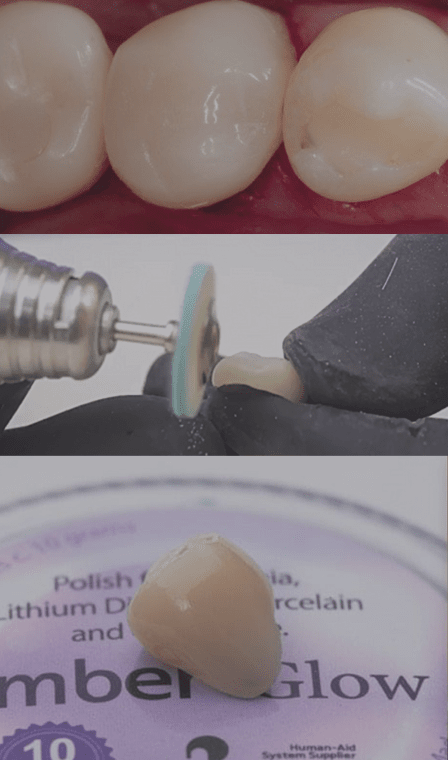
QWhen polishing Amber Mill H with Amber Glow, the gloss is insufficient.
A
Before using Amber Glow, smooth the surface with a rubber point to increase surface smoothness; then Amber Glow will produce gloss easily.
In the high-polishing stage, polishing at low speed (about 8,000–10,000 RPM) also makes it easy to achieve gloss.
QIf no cleaning solution is used for Rosetta SP, at what pressure should it be sandblasted?
A
1.5–2 bar
QIf no cleaning solution is used for Amber Press, at what pressure should it be sandblasted?
A
1.5–2 bar, using 50 µm aluminum oxide
QAmber Mill Direct is said to polish well. Which tools should I use?
A
1. To remove surface texture, etc.: diamond stone points and wheels containing diamond particles, and electroplated diamond burs.
2. To adjust surface roughness: ceramic rubber points and wheels containing diamond particles.
3. To obtain gloss: Amber Glow makes polishing quick and easy.
QIf a fine crack occurs from thermal shock while polishing Rosetta SM after milling, is there a way to repair it?
A
Clean thoroughly, apply a small amount of glaze liquid to the crack, and perform crystallization firing (840 °C, 10 min); the crack line will fuse.
Deep cracks may not fuse.
QHow can blackening during glaze firing be prevented?
A
Keep the drying time in the firing schedule at 6 minutes or longer.
When firing 10 or more restorations at once, extend the drying time by 2 minutes or more.
QMasking discolored abutments when fabricating thin veneers with Rosetta SM - When the abutment is severely discolored, there are cases where the discoloration shows through even with LT or MO translucency. - Is there a recommended stain method for this case?
A
Covering discoloration with external stains is limited.
Using a white-colored cement helps cover discoloration.
We recommend removing the discolored part of the abutment in the clinic, filling it with composite resin, and then preparing the abutment.
No questions for this product under this topic. Try another topic or clear the product filter.
Answers are based on HASS technical guidance. Always follow the Instructions for Use (IFU) and the equipment manufacturer's recommendations.